การพัฒนาทักษะซอฟต์สกิลยุคดิจิทัล: บทบาทของ อสม. 4.0
คำสำคัญ:
ความรอบรู้ดิจิทัล, ทักษะซอฟต์สกิล, อาสาสมัครสาธารณสุขประจำหมู่บ้านบทคัดย่อ
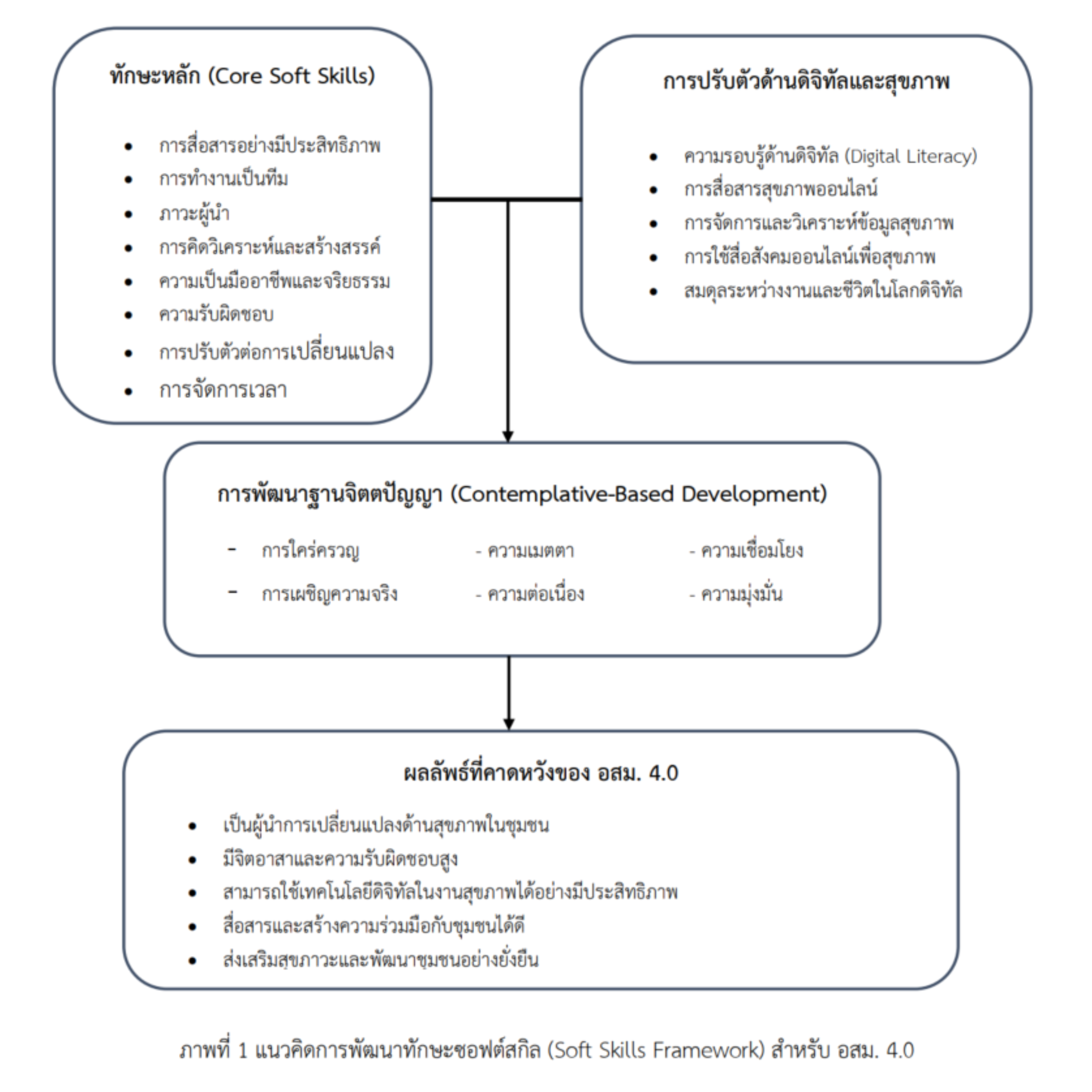
บทความวิชาการนี้มุ่งวิเคราะห์บทบาทของอาสาสมัครสาธารณสุขประจำหมู่บ้าน (อสม.) 4.0 ในการพัฒนาทักษะซอฟต์สกิล (Soft Skills) ซึ่งเป็นสมรรถนะสำคัญที่ส่งเสริมศักยภาพการทำงานด้านสุขภาพในยุคดิจิทัล ขณะที่เทคโนโลยีและนวัตกรรมมีบทบาทเป็นกลไกขับเคลื่อนหลักของระบบบริการสุขภาพชุมชน การศึกษานี้เป็นการทบทวนวรรณกรรมเชิงวิเคราะห์ (Analytical Literature Review) โดยคัดสรรงานวิจัยและเอกสารทางวิชาการที่เกี่ยวข้อง เพื่อสังเคราะห์องค์ความรู้เกี่ยวกับทักษะซอฟต์สกิลที่จำเป็นต่อการปรับตัว การสื่อสาร และการบริหารจัดการงานสุขภาพในระดับพื้นที่ ผลการสังเคราะห์พบว่า ทักษะซอฟต์สกิลที่สำคัญของอสม. 4.0 มี 5 มิติหลัก ได้แก่ 1) ความคิดสร้างสรรค์เชิงนวัตกรรม เพื่อแก้ไขปัญหาและใช้เทคโนโลยีอย่างเหมาะสม 2) ทักษะการสื่อสารและการโน้มน้าวใจเชิงกลยุทธ์ เพื่อส่งเสริมการยอมรับเทคโนโลยีและเผยแพร่ความรู้สุขภาพ 3) การทำงานร่วมกันอย่างมีประสิทธิผล ที่ตั้งอยู่บนความไว้วางใจ ความเห็นอกเห็นใจ และภาวะผู้นำร่วม 4) ความยืดหยุ่นและการปรับตัวต่อการเปลี่ยนแปลง เพื่อคงความทันสมัยและเพิ่มประสิทธิภาพการทำงาน และ 5) การบริหารเวลาและทรัพยากรส่วนบุคคล เพื่อสร้างสมดุลระหว่างภารกิจชุมชนและการพัฒนาตนเอง โดยการพัฒนาอสม. 4.0 จึงควรมุ่งเสริมสร้างทั้งทุนทางจิตสังคมและการเรียนรู้ตลอดชีวิต เพื่อหล่อหลอมทักษะซอฟต์สกิลให้กลายเป็นทุนมนุษย์ที่ยั่งยืน โดยการส่งเสริมคุณค่าทางจิตใจ เช่น ความเมตตา การยอมรับ และการช่วยเหลือกัน จะเป็นรากฐานของการสร้างชุมชนแห่งการเรียนรู้ (Learning Community) ที่สามารถบูรณาการเทคโนโลยีดิจิทัลเพื่อพัฒนางานสุขภาพได้อย่างมีประสิทธิผลและยั่งยืน
เอกสารอ้างอิง
Adhim M. R. F. & Suherman E. (2024). Analisis Kompetensi Karyawan Terhadap Kinerja Karyawan di Era Digital. Optimal, 4(3), 95–108. https://doi.org/10.55606/optimal.v4i3.3915
Anderson N. et al. (2014). Innovation and creativity in organizations: A state-of-the-science review, prospective commentary, and guiding framework. Journal of Management, 40(5), 1297-1333.
Frey C. B. & Osborne M. A. (2017). The future of employment: How susceptible are jobs to computerisation?. Technological Forecasting and Social Change, 114, 254–280. https://doi.org/10.1016/j.techfore.2016.08.019
International Education Specialists. (2025, January 18). Essential skills for workers in the digital age. IDP Education. https://www.idp.com/thailand/blog/soft-skill-digital-age/
Kusolsong S. & Kusolsong P. (2022). Development of Participatory Learning Management Model embedded Mental Intelligence - Mentoring System - Project-based Activity – Research-based Learning to Strengthening Soft Skills for Rajabhat University Student Teachers. Journal of Education Khon Kaen University, 45(3), 1-18.
Lamri J. & Lubart T. (2023). Reconciling hard skills and soft skills in a common framework: The generic skills component approach. Journal of Intelligence, 11(6), 107. https://doi.org/10.3390/jintelligence11060107
Obermayer N. et al. (2023). Importance of digital and soft skills in the digital age. European Conference on Knowledge Management, 24(2), 978–987. https://doi.org/10.34190/eckm.24.2.1550
OECD. (2023). OECD Skills Outlook 2023: Skills for a Resilient Green and Digital Transition. OECD Publishing. https://www.oecd.org/content/dam/oecd/en/publications/reports/2023/11/oecd-skills-outlook-2023_df859811/27452f29-en.pdf?utm_source=chatgpt.com
Puti S. et al. (2024). Knowledge, attitudes, skills, and satisfaction of village health volunteers on using community mental health support guidelines in the southern border provinces. Journal of Nursing, Midwifery and Health Sciences Research, 44(2), 63–79.
Ramos-Monge E. et al. (2023). Addressing soft skill gaps in the digital employment market: the case of Spanish students in a technology-based university. Education + Training, 65(6/7), 923–938. https://doi.org/10.1108/ET-04-2023-0165
Shah N. et al. (2023). Leading towards the students’ career development and career intentions through using multidimensional soft skills in the digital age. Education + Training, 65(6/7), 848–870. https://doi.org/10.1108/ET-12-2022-0470
Sitthichaijarumethee S. & Bubpha S. (2022). Soft skills of the administrators affecting effectiveness of medium schools under the Secondary Educational Service Area Office Nong Khai. Journal of MCU Ubon Review, 7(2), 2169-2184.
Songkhla City Municipality. (2025, January 18). Guidelines for developing the potential of public health volunteers (PHVs) 4.0. Songkhla City Municipality https://www.songkhlacity.go.th/2020/files/com_news_research/2019-11_60993e139dc0955.pdf
Suksen, A. (2022). 4 Soft Skills for The Digital Quotient. The journal of social communication innovation, 10(2), 165-173.
Thongkanta C. & Kaewtai N. (2023). Communication by Using Digital Technology for Public Health Care of Health Volunteers in Villages in the 4.0 Era, Nong Bua District, Nakhon Sawan Province. EAU Heritage Journal Science and Technology, 17(1), 30-40.
Thotet, P. (2020). A Study of the Competency Development Model for Village Health Volunteers 4.0 North Region, 2018. Journal of Human Society, 10(1), 34.44.
Uamsathit, T. (2021). The development of 'soft skills' through the actualization of the volunteer project according to the rules of contemplative education. Journal of Liberal Art of Rajamangala University of Technology Suvarnabhumi, 3(1), 37-50.
Uthai S. et al. (2025). Thailand is strengthening its public health system by enhancing the health literacy of village health volunteers. Malaysian Journal of Public Health Medicine, 25(3), 108-117.
Yuenyong P. & Samranjit S. (2024). Relationship between transformational leadership and soft skills of the director of sub-district health promotion hospital in Chachoengsao Province. Thammasat University Hospital Journal Online, 9(1), 32-44.
ดาวน์โหลด
เผยแพร่แล้ว
วิธีการอ้างอิง
ฉบับ
บท
การอนุญาต
ลิขสิทธิ์ (c) 2025 วารสารสาธารณสุขมูลฐาน (ภาคตะวันออกเฉียงเหนือ)

This work is licensed under a Creative Commons Attribution-NonCommercial-NoDerivatives 4.0 International License.