การพัฒนารูปแบบการเฝ้าระวัง ป้องกัน และควบคุมวัณโรคแบบมีส่วนร่วม จังหวัดอ่างทอง
คำสำคัญ:
วัณโรค, การเฝ้าระวัง ป้องกัน และควบคุมวัณโรค, ชุมชนเป็นฐาน, การวิจัยเชิงปฏิบัติการแบบมีส่วนร่วม, การตีตราบทคัดย่อ
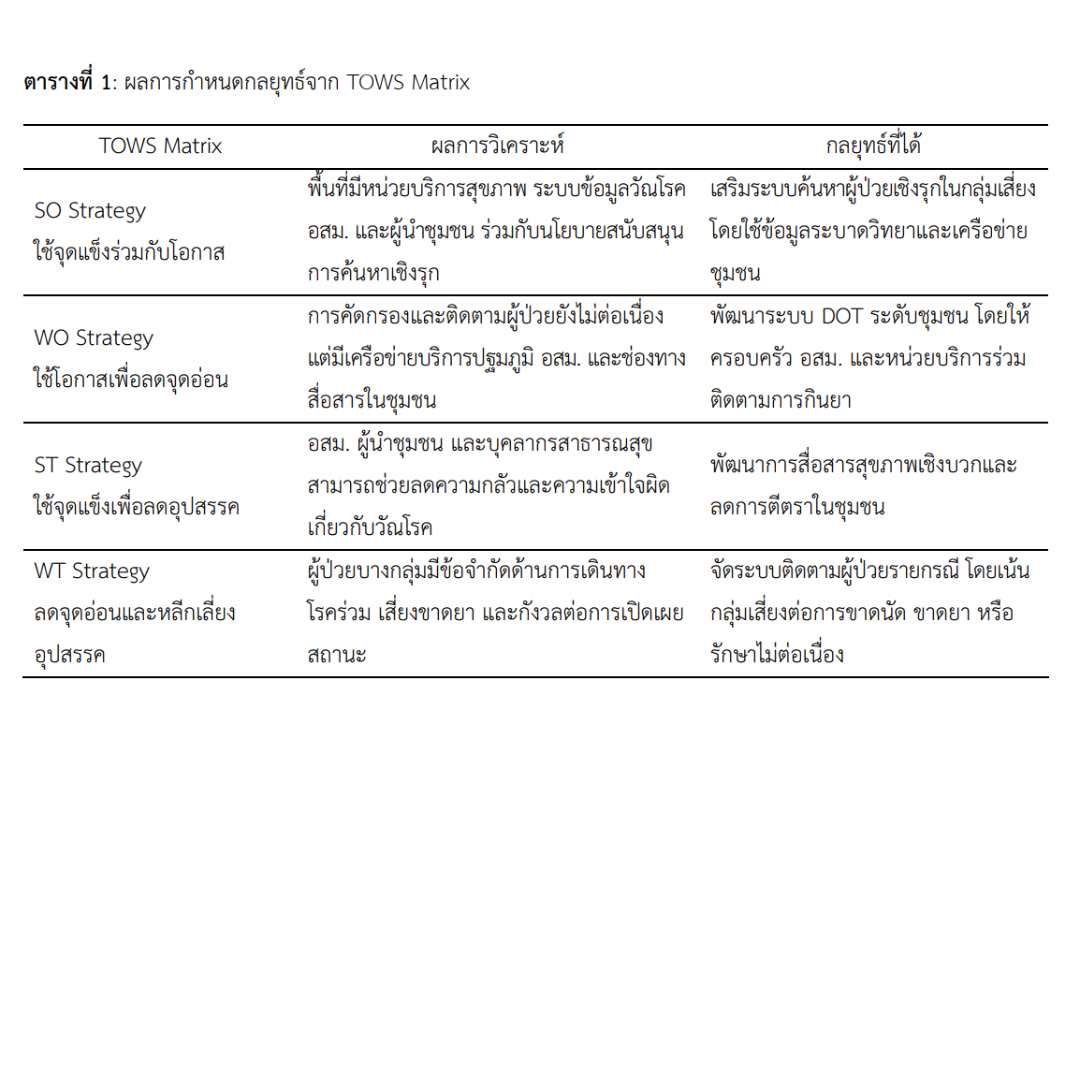
การวิจัยเชิงปฏิบัติการแบบมีส่วนร่วมนี้มีวัตถุประสงค์เพื่อพัฒนาและประเมินผลลัพธ์ระยะสั้นของรูปแบบการเฝ้าระวัง ป้องกัน และควบคุมวัณโรคโดยใช้ชุมชนเป็นฐานในจังหวัดอ่างทอง ใช้กรอบ PRECEDE–PROCEED ดำเนินการเดือนเมษายน–พฤศจิกายน พ.ศ. 2568 แบ่งเป็น 5 ระยะ ได้แก่ ประเมินสถานการณ์ พัฒนากลยุทธ์ ทดลองใช้รูปแบบ ประเมินผลลัพธ์ระยะสั้น และสะท้อนบทเรียน ผู้เข้าร่วมแตกต่างกันตามระยะ ได้แก่ ผู้ให้ข้อมูลหลัก 37 คน และประชาชน 436 คน (ประเมินสถานการณ์) ผู้มีส่วนได้ส่วนเสีย 40 คน (พัฒนารูปแบบ) ผู้ป่วยวัณโรค 55 คน สมาชิกครอบครัว 55 คน และ อสม. 32 คน (ทดลองใช้และประเมินผล) และผู้มีส่วนได้ส่วนเสีย 53 คน (สะท้อนผล) เครื่องมือวิจัยประกอบด้วยแบบเก็บข้อมูลทุติยภูมิ แบบสอบถาม แนวคำถามสัมภาษณ์ และแบบบันทึกกิจกรรม วิเคราะห์เชิงปริมาณด้วยสถิติพรรณนาและสถิติทดสอบทีแบบกลุ่มสัมพันธ์ และเชิงคุณภาพด้วยการวิเคราะห์เนื้อหา ผลการวิจัยพบว่า ผลประเมินสถานการณ์พบปัญหาการค้นหาและคัดกรองกลุ่มเสี่ยงไม่ครอบคลุม ระบบติดตามพึ่งพาบุคลากรเป็นหลัก ข้อมูลเชื่อมโยงระหว่างหน่วยบริการกับชุมชนไม่ต่อเนื่อง และการตีตรายังเป็นอุปสรรคต่อการเข้าสู่ระบบบริการ จึงนำไปสู่รูปแบบ 3 กลยุทธ์หลัก คือ ค้นหาผู้ป่วยเชิงรุกโดยจัดลำดับความเสี่ยง พัฒนาระบบ DOT ระดับชุมชน และลดการตีตราผ่านการสื่อสารสุขภาพเชิงบวก ผลระยะสั้นพบว่า บุคลากร และ อสม. ผ่านการอบรม ร้อยละ 85.00 กลุ่มเสี่ยงได้รับการคัดกรอง ร้อยละ 95.00 ผู้ป่วยมีผู้สังเกตการรับประทานยา ร้อยละ 88.60 และรับประทานยาสม่ำเสมอ ร้อยละ 91.20 คะแนนการรับรู้ความเสี่ยงและการเข้าสู่ระบบรักษาเพิ่มขึ้น ขณะที่คะแนนการรับรู้การตีตราลดลง อย่างมีนัยสำคัญทางสถิติ รูปแบบนี้สะท้อนความเป็นไปได้ในการบูรณาการบริการสุขภาพกับกลไกชุมชน อย่างไรก็ตาม ควรติดตามผลลัพธ์ระยะยาวหลังสิ้นสุดรอบการรักษาเพื่อประเมินความยั่งยืนของรูปแบบและผลต่ออัตราความสำเร็จการรักษา
เอกสารอ้างอิง
Aitambayeva N. et al. (2025). A systematic review of tuberculosis stigma reduction interventions. Healthcare, 13(15), 1846. https://doi.org/10.3390/healthcare13151846
Alinaitwe B. et al. (2025). Treatment adherence and its association with family support among pulmonary tuberculosis patients in Jinja, Eastern Uganda. Scientific Reports, 15(2025), 11150. https://doi.org/10.1038/s41598-025-96260-8
Ang Thong Provincial Public Health Office. (2024). Ang Thong Province Tuberculosis Situation Report, Fiscal Year 2023. Ang Thong: Ang Thong Provincial Public Health Office.
Craig G. M. et al. (2017). Tuberculosis stigma as a social determinant of health. International Journal of Infectious Diseases, 56, 90–100. https://doi.org/10.1016/j.ijid.2016.10.011
Davis R. A. et al. (2024). Examining interventions that aim to enhance TB treatment adherence in Southeast Asia: A systematic review and meta-analysis. Indian Journal of Tuberculosis, 71(1), 48–63. https://doi.org/10.1016/j.ijtb.2023.03.001
Department of Disease Control. (2023). National Tuberculosis Strategic Plan B.E. 2564–2569 (2021–2026). Ministry of Public Health.
Green L. W. & Kreuter M. W. (2005). Health program planning: An educational and ecological approach (4th ed.). McGraw-Hill.
Khan M. S. et al. (2022). Community-based interventions for tuberculosis control. International Journal of Tuberculosis and Lung Disease, 26(5), 420–429.
Kranzer K. et al. (2013). The benefits to communities and individuals of screening for active tuberculosis disease: A systematic review. The International Journal of Tuberculosis and Lung Disease, 17(4), 432–446.
MacNeil A. et al. (2020). Global epidemiology of tuberculosis. Lancet Infectious Diseases, 20(11), e325–e336.
Sommerland N. et al. (2017). Evidence-based interventions to reduce tuberculosis stigma: A systematic review. International Journal of Tuberculosis and Lung Disease, 21(11), 81–86. https://doi.org/10.5588/ijtld.16.0788
Sulistyorini D. et al. (2023). Tuberculosis stigma: Mapping research themes and future directions. Social Science & Medicine, 322, 115758.
Wallerstein N. & Duran B. (2010). Community-based participatory research contributions to intervention research: the intersection of science and practice to improve health equity. Am J Public Health, 1(1), S40-46. https://doi.org/10.2105/AJPH. 2009.184036.
World Health Organization. (2024a). Global tuberculosis report 2024. World Health Organization. https://www.who.int/teams/global-programme-on-tuberculosis-and-lung-health/tb-reports/global-tuberculosis-report-2024
World Health Organization. (2024b). WHO operational handbook on tuberculosis: Module 4: Treatment: Tuberculosis care and support. World Health Organization. https://iris.who.int/handle/10665/376743
ดาวน์โหลด
เผยแพร่แล้ว
วิธีการอ้างอิง
ฉบับ
บท
การอนุญาต
ลิขสิทธิ์ (c) 2026 วารสารสาธารณสุขมูลฐาน (ภาคตะวันออกเฉียงเหนือ)

This work is licensed under a Creative Commons Attribution-NonCommercial-NoDerivatives 4.0 International License.