รูปแบบและกลไกสำนักงานเศรษฐกิจสาธารณสุข: บทเรียนต่างประเทศสู่ข้อเสนอเชิงนโยบายไทย
คำสำคัญ:
สำนักงานเศรษฐกิจสาธารณสุข, เศรษฐศาสตร์สาธารณสุข, นโยบายสาธารณสุข, การประเมินเทคโนโลยีสุขภาพบทคัดย่อ
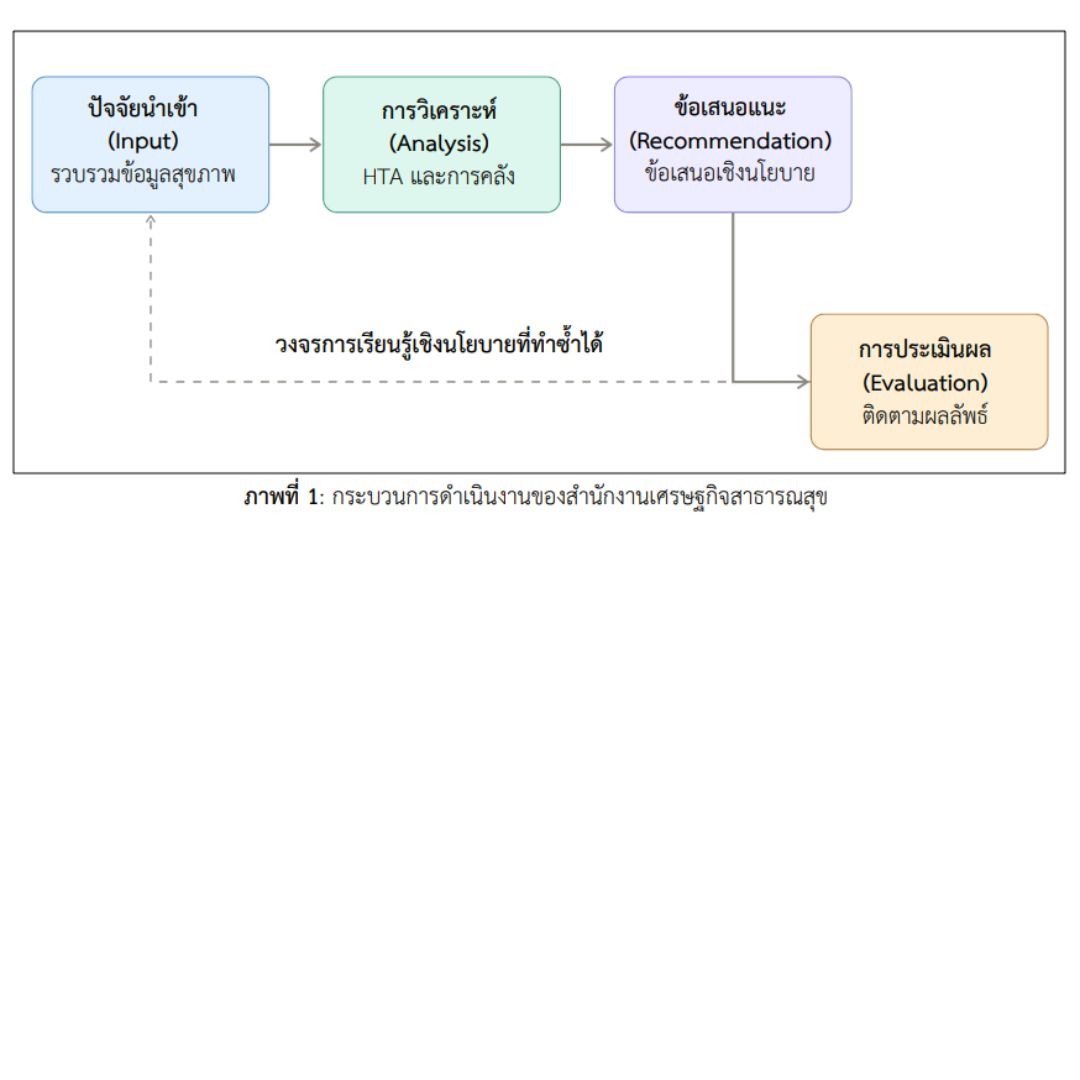
ระบบสาธารณสุขทั่วโลกกำลังเผชิญความท้าทายจากการเพิ่มขึ้นของโรคไม่ติดต่อเรื้อรัง การเปลี่ยนแปลงโครงสร้างประชากร ความก้าวหน้าทางเทคโนโลยีการแพทย์ และข้อจำกัดของงบประมาณภาครัฐ ทำให้การกำหนดนโยบายสาธารณสุขจำเป็นต้องอาศัยการวิเคราะห์ทางเศรษฐศาสตร์ควบคู่กับข้อมูลทางการแพทย์ สำหรับประเทศไทย แม้จะประสบความสำเร็จในการพัฒนาระบบหลักประกันสุขภาพถ้วนหน้า แต่การควบคุมและพยากรณ์ภาระทางการคลังในระยะยาว ตลอดจนการจัดสรรทรัพยากรสุขภาพอย่างเป็นธรรม ยังคงเป็นช่องว่างเชิงนโยบายที่ยังไม่มีหน่วยงานใดรับผิดชอบอย่างเป็นเอกภาพ บทความวิชาการนี้มีวัตถุประสงค์เพื่อศึกษารูปแบบและกลไกการดำเนินงานของหน่วยงานด้านเศรษฐศาสตร์สาธารณสุขในสหราชอาณาจักร ออสเตรเลีย และสาธารณรัฐเกาหลี เพื่อสังเคราะห์บทเรียนสำหรับการออกแบบสำนักงานเศรษฐกิจสาธารณสุข โดยใช้วิธีการศึกษาจากเอกสาร ผลการศึกษา พบว่า แม้ทั้งสามประเทศจะมีโครงสร้างสถาบันแตกต่างกัน แต่มีองค์ประกอบร่วมที่สำคัญ บทเรียนดังกล่าวนำไปสู่ข้อเสนอกลไก 4 ประการ ได้แก่ การประเมินความคุ้มค่าของเทคโนโลยีสุขภาพ การบริหารจัดการข้อมูลสุขภาพระดับชาติ การพยากรณ์ภาระทางการคลัง และการประเมินผลนโยบายภายหลังการดำเนินการ การจัดตั้งหน่วยงานนี้จะช่วยเติมเต็มช่องว่างเชิงนโยบายและรองรับความยั่งยืนของระบบสุขภาพไทยในระยะยาว
เอกสารอ้างอิง
Charlton, V. (2022). Justice, transparency and the guiding principles of the UK's National Institute for Health and Care Excellence. Health Care Analysis, 30(2), 115–145. https://doi.org/10.1007/s10728-021-00444-y
Dakin et al. (2015). The influence of cost-effectiveness and other factors on NICE decisions. Health Economics, 24(10), 1256–1271. https://doi.org/10.1002/hec.3086
Department of Health, Disability and Ageing. (n.d.). Pharmaceutical Benefits Advisory Committee (PBAC) membership. Pharmaceutical Benefits Scheme (PBS). https://www.pbs.gov.au/industry/listing/participants/pbac
Freihat O. et al. (2025). Global burden and future projections of non-communicable diseases (2000–2050): Progress toward SDG 3.4 and disparities across regions and risk factors. PLOS One, 20(12), e0336036. https://doi.org/10.1371/journal.pone.0336036
Garbi, M. (2021). National Institute for Health and Care Excellence clinical guidelines development principles and processes. Heart, 107(12), 949–953. https://doi.org/10.1136/heartjnl-2020-318661
Health and Social Care Act. (2012 c. 7 (UK). Health and Social Care Act 2012. legislation. https://www.legislation.gov.uk/ukpga/2012/7/contents
HITAP. (n.d.). About HITAP. Health Intervention and Technology Assessment Program (HITAP). https://www.hitap.net/th/about-us/
Kaushik et al. (2025). Challenges and opportunities for data sharing related to artificial intelligence tools in health care in low- and middle-income countries: Systematic review and case study from Thailand. Journal of Medical Internet Research, 27(2025), e58338. https://doi.org/10.2196/58338
Kilbourne et al. (2024). The translation-to-policy learning cycle to improve public health. Learning Health Systems, 8(4), e10463. https://doi.org/10.1002/lrh2.10463
Lee R. & Miller T. (2002). An approach to forecasting health expenditures, with application to the U.S. Medicare system. Health Services Research, 37(5), 1365–1386. https://doi.org/10.1111/1475-6773.01112
Leelahavarong et al. (2019). Health technology assessment in Thailand: Institutionalization and contribution to healthcare decision making: Review of literature. International Journal of Technology Assessment in Health Care, 35(6), 467–473. https://doi.org/10.1017/S0266462319000321
Millar R. et al. (2021). Assessing the performance of health technology assessment (HTA) agencies: Developing a multi-country, multi-stakeholder, and multi-dimensional framework to explore mechanisms of impact. Cost Effectiveness and Resource Allocation, 19(2021), 37. https://doi.org/10.1186/s12962-021-00290-8
Latest version. (2026, July 07). National Health Act 1953. Australian Government. https://www.legislation.gov.au/C1953A00095
Nolwachai, W. (2026). Legal analysis and organizational structure for the establishment of the Office of Health Economics in Thailand. Journal of Khon Kaen Provincial Health Office, 8(2), e283216.
Office for Health Improvement and Disparities. (2020, October 13). Cost utility analysis: Health economic studies. GOV.UK. https://www.gov.uk/guidance/cost-utility-analysis-health-economic-studies
Oh et al. (2023). Institutionalizing health technology assessment and priority setting in South Korea's universal health coverage journey. Health Systems & Reform, 9(3), 233830. https://doi.org/10.1080/23288604.2024.2338308
Organisation for Economic Co-operation and Development. (2025, October 29). Digital government review of Korea: Harnessing digital and data to transform government. Paris: OECD Publishing. https://doi.org/10.1787/9defc197-en
Pellense et al. (2025). Evaluation of quality policies and strategies in health systems: A scoping review. BMJ Open, 15(2025), e092654. https://doi.org/10.1136/bmjopen-2024-092654
Rawlins, M. (2013). NICE: An evolving institution. Annals of the Royal College of Surgeons of England, 95(2), 148–149. https://doi.org/10.1308/003588413X13511609957650
Seong et al. (2017). Data resource profile: The National Health Information Database of the National Health Insurance Service in South Korea. International Journal of Epidemiology, 46(3), 799–800. https://doi.org/10.1093/ije/dyw253
Sumriddetchkajorn et al. (2019). Universal health coverage and primary care, Thailand. Bulletin of the World Health Organization, 97(6), 415–422. https://doi.org/10.2471/BLT.18.223693
Turner H. C. et al. (2023). What are economic costs and when should they be used in health economic studies? Cost Effectiveness and Resource Allocation, 21(2023), 31. https://doi.org/10.1186/s12962-023-00436-w
ดาวน์โหลด
เผยแพร่แล้ว
วิธีการอ้างอิง
ฉบับ
บท
การอนุญาต
ลิขสิทธิ์ (c) 2026 วารสารสาธารณสุขมูลฐาน (ภาคตะวันออกเฉียงเหนือ)

This work is licensed under a Creative Commons Attribution-NonCommercial-NoDerivatives 4.0 International License.