EFFECTS OF A HEALTH BEHAVIOR MODIFICATION PROGRAM ON OVERWEIGHT PERSONNEL AT BUENGKAN HOSPITAL, BUENGKAN PROVINCE
Keywords:
Health behavior, Body mass index, Behavior modification program, Lifestyle medicine, Healthcare workersAbstract
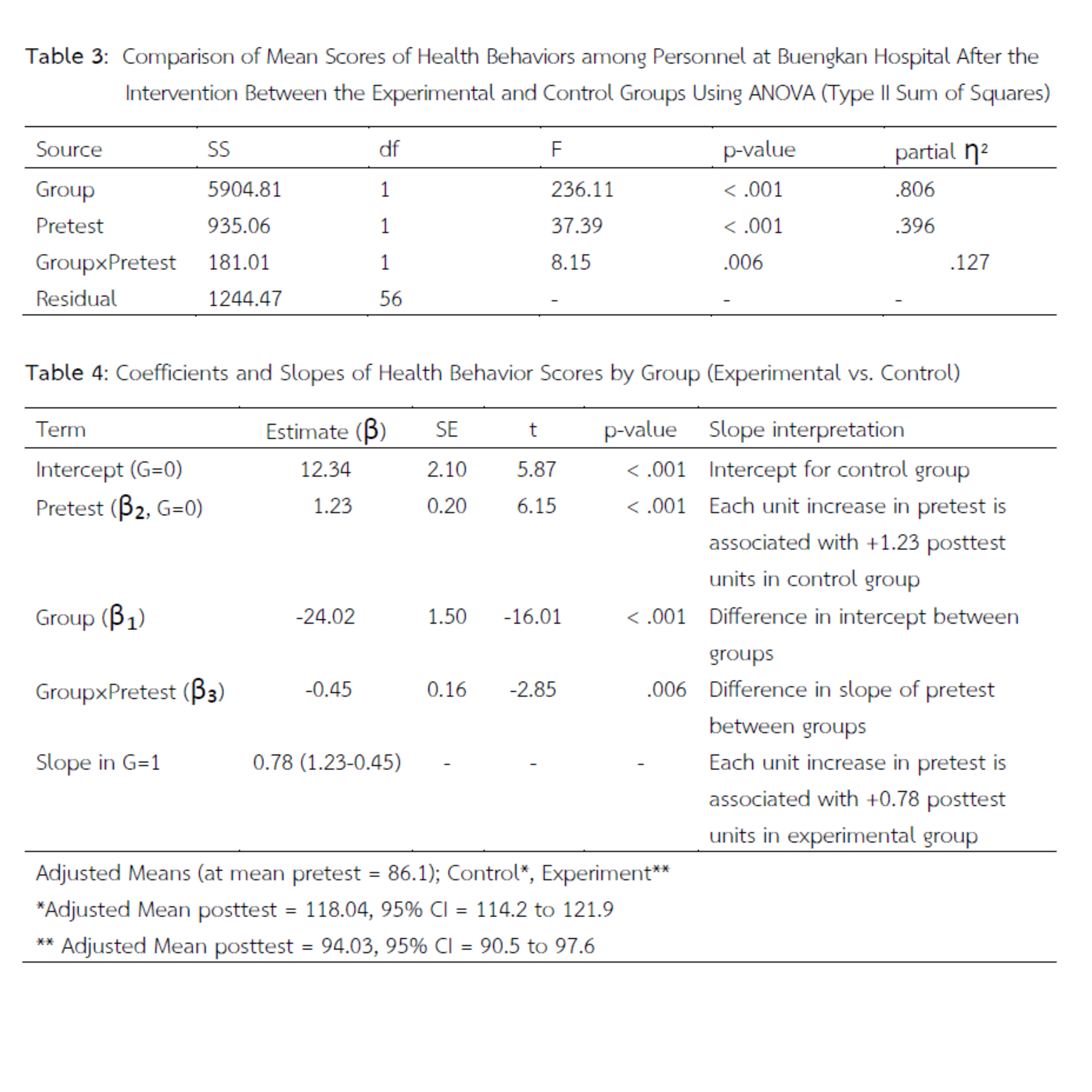
Overweight and obesity among public health personnel pose significant health challenges and affect their ability to serve as role models for the community. This quasi-experimental study aimed to evaluate the effects of a health behavior modification program among hospital personnel with a body mass index (BMI) exceeding the standard threshold at Buengkan Hospital. The intervention was based on Social Cognitive Theory and Lifestyle Medicine principles. The sample consisted of 60 overweight personnel selected through simple random sampling. Participants were divided into an experimental group (n = 30), which received a 12-week health behavior modification program, and a control group (n = 30), which received standard follow-up care at the Disease Prevention and Control Clinic (DPAC). Data were collected using body composition assessment records and a health behavior questionnaire. Descriptive statistics included percentages, means, and standard deviations. Inferential statistics included Paired Sample t-tests and Independent t-tests. Results showed that, after the intervention, the experimental group had a significantly higher mean health behavior score compared to the control group (Mean Difference = 29.40, p < .001). Body composition indicators also improved significantly in the experimental group, including an average BMI reduction of 1.40 units, a waist circumference reduction of 7.99 cm, a decrease in body fat percentage by 7.63%, and an increase in muscle mass by 14.07 units. In conclusion, the health behavior modification program designed specifically for personnel with high BMI was effective in improving both health behaviors and body composition. It is recommended that this program be integrated into routine hospital health services or incorporated into health promotion policies for personnel to ensure organizational sustainability in structure and resources.
References
Bandura, A. (1986). Social foundations of thought and action: A social cognitive theory. Prentice-Hall: Inc.
Bueng Kan Hospital. (2024). Summary report of annual personnel health check-up, 2024. Bueng Kan Hospital.
Jintanapanya, P. (2023). Effect of a behavior modification program on health behaviors and nutritional status of personnel with overweight and obesity at Thung Song Hospital, Nakhon Si Thammarat Province. Maharaj Nakhon Si Thammarat Medical Journal, 7(1), 28–41.
Kongkaew N. et al. (2022). Effects of a dietary approaches to stop hypertension (DASH) program on food consumption behaviors among a risk group for hypertension in Na Bon District, Nakhon Si Thammarat Province. Journal of Health Science, 31(6), 1008-1018.
Lertsilp, W. (2024, April 5). The effect of a health promotion program on health behavior modification among personnel at risk with metabolic syndrome at Surat Thani Hospital regarding diet control, exercise, and emotional management. Surat ThaniHospital. https://shorturl.asia/WH2bU
Phoemphun N. et al. (2016). Effects of a Behavior Changing Program on the Health Behaviorand Nutrition of Overweight Employees in the Workplace. Rama Nurs J, 22(2), 177-191.
Prateepmanowong, J. (2015). The effect of a health behavior modification program on eating and exercise behaviors of elderly patients with coronary artery disease and overnutrition, [Thesis of Master of Nursing Science Program in Nursing Science]. Faculty of Nursing: Chulalongkorn University.
Saenyacharoenkul, W. (2017). Effect of a food consumption modification program on food consumption behavior in a high-risk group for diabetes, [Thesis of Master of Nursing Science Program in Community nursing practice]. Graduate School: Mahidol University.
Siangliew, S. (2023, June). Lifestyle Medicine. Division of Complementary and Alternative Medicine, Department of Thai Traditional and Alternative Medicine. https://shorturl.asia/AZvwz
Sribenjamas N. & Samruayruen K. (2021). Effectiveness of a health behavior modification program on health behaviors of the elderly in Chom Thong Sub-district, Mueang District, Phitsanulok Province. Eastern Asia University Academic Journal Science and Technology, 15(1), 155–166.
ThaiHealth Official. (2022, March). Obesity rates among Thais are rising sharply: Cooperation recommended for prevention and solutions on World Obesity Day. https://shorturl.asia/eTchJ
Thapyoo, N. (2022). Effects of health behavior modification program in personnel with visceral fat levels and body mass index exceeding standards, Damnoen Saduak Hospital, Ratchaburi. Journal of Research for Health Improvement and Quality of Life, 2(2), 1-12.
Downloads
Published
How to Cite
Issue
Section
License
Copyright (c) 2025 Primary Health Care Journal (Northeastern Edition)

This work is licensed under a Creative Commons Attribution-NonCommercial-NoDerivatives 4.0 International License.